AI Art Styles
This entry documents how a generative image model rendered Suprematism when the movement was named in a prompt. It forms part of a survey of 60 art movements generated in February 2024.
The images
Two subjects are held constant across the series: Lake Kenogamissi in Northern Ontario, and Times Square in New York City. Each is rendered twice. A thin prompt names the movement and nothing else. A thick prompt supplies a generated description of the movement’s visual characteristics.

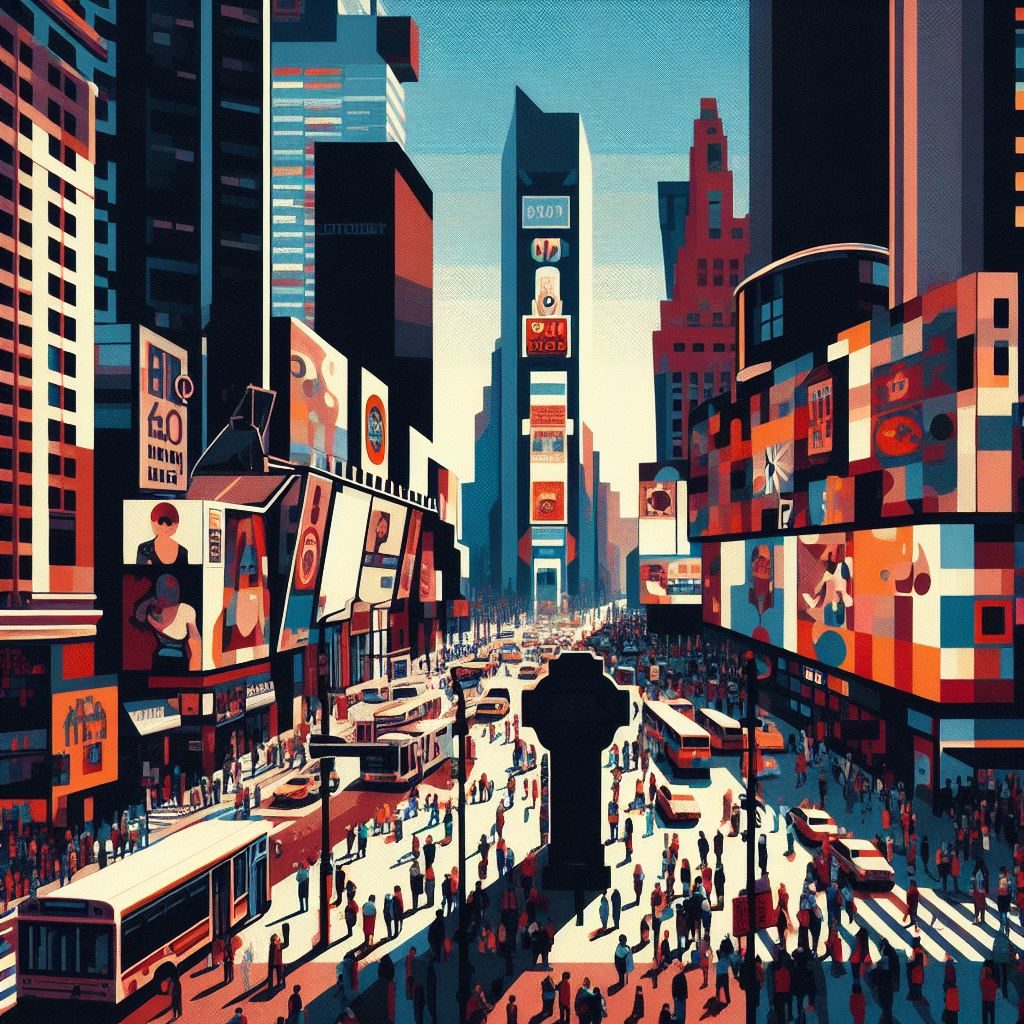
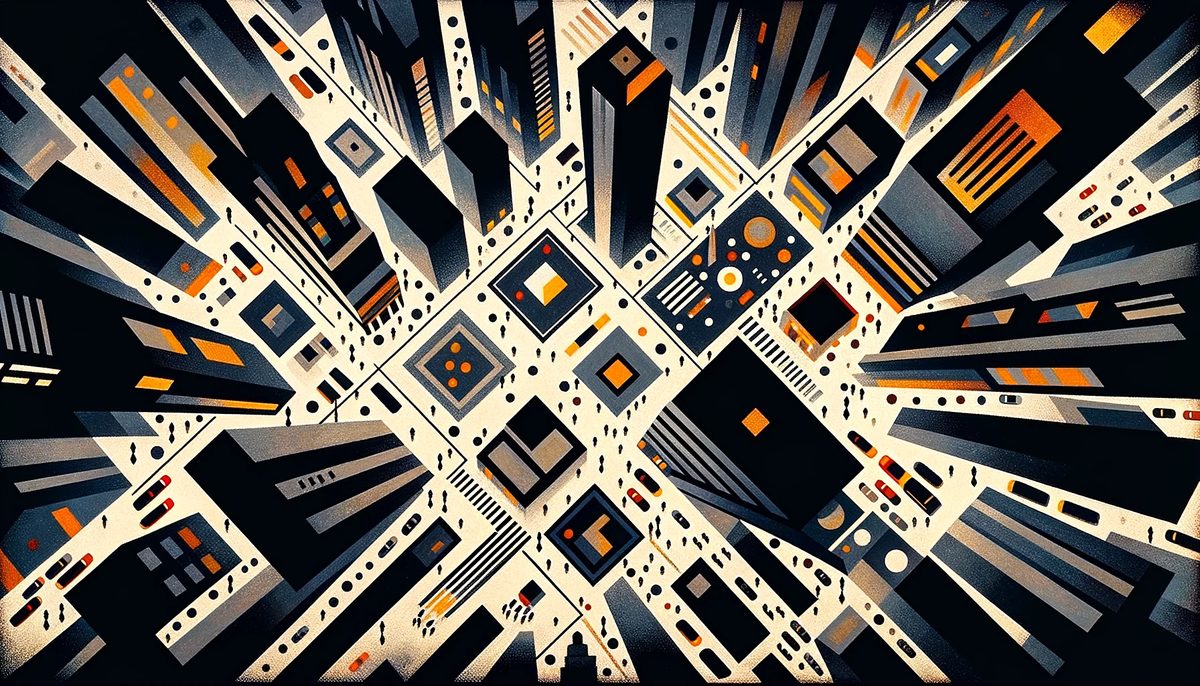
The 2024 run did not produce every image for this movement; missing cells are marked rather than substituted.
The thick descriptor
The following description was generated by GPT-4 and supplied to the image model as the thick prompt.
Suprematism, an early 20th-century Russian art movement, relies heavily on basic geometric forms (circles, squares, rectangles) and a limited color palette. It was founded by Kazimir Malevich. Suprematist art emphasizes “the supremacy of pure artistic feeling,” focusing on abstract forms rather than visual depiction of objects. Characteristics include prominent use of geometric shapes, often depicting them in movement or in a state of flux. Monochrome artwork, emphasizing a single hue, is also a recognisable feature of this style.
About this movement
Background on Suprematism is available at its Wikipedia entry. The images above are not offered as an account of Suprematism as art historians understand it. They record what a commercial image model produced when asked for the style by name.
About this series
This entry is part of a survey, described in the series introduction. The full set of 60 movements is browsable in the Art Styles index. The survey used text-to-image generation, in which composition varies alongside the style itself.