AI Art Styles
This entry documents how a generative image model rendered Abstract Expressionism when the movement was named in a prompt. It forms part of a survey of 60 art movements generated in February 2024.
The images
Two subjects are held constant across the series: Lake Kenogamissi in Northern Ontario, and Times Square in New York City. Each is rendered twice. A thin prompt names the movement and nothing else. A thick prompt supplies a generated description of the movement’s visual characteristics.
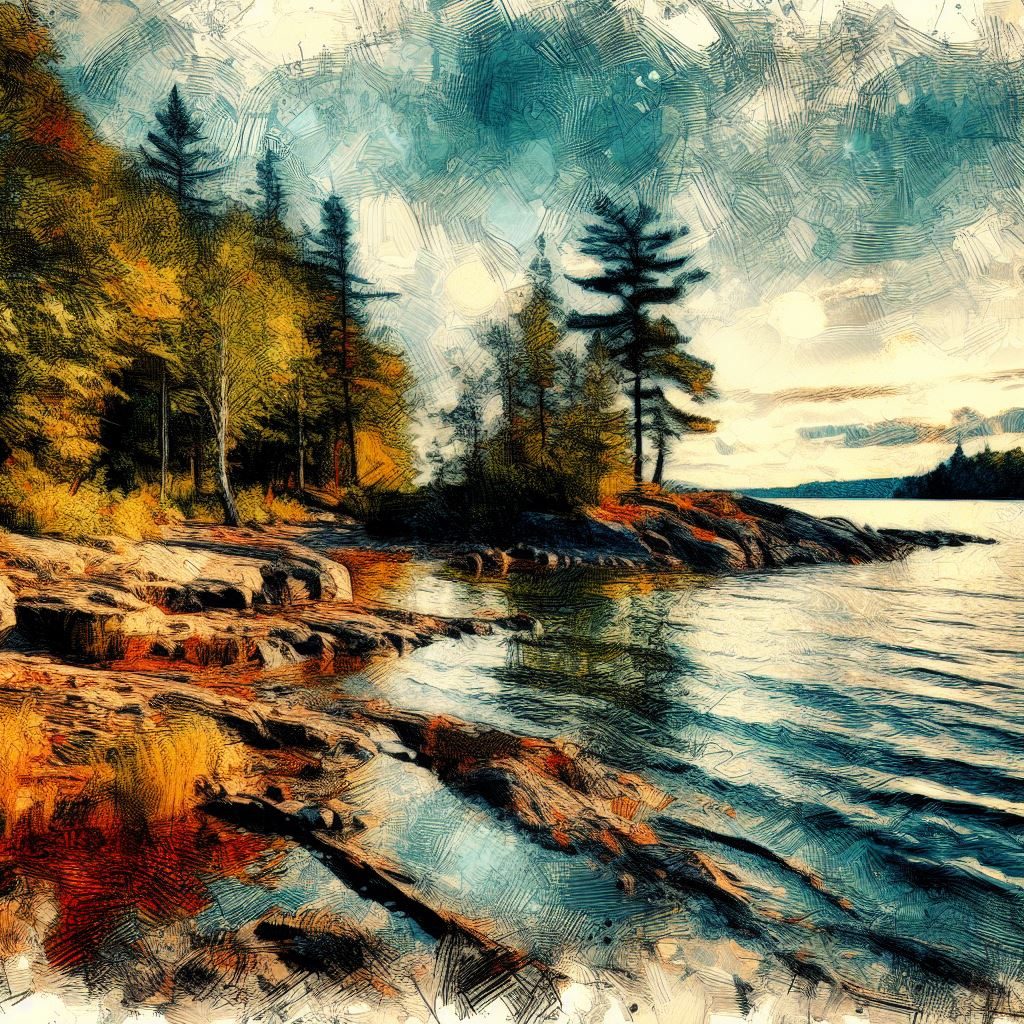
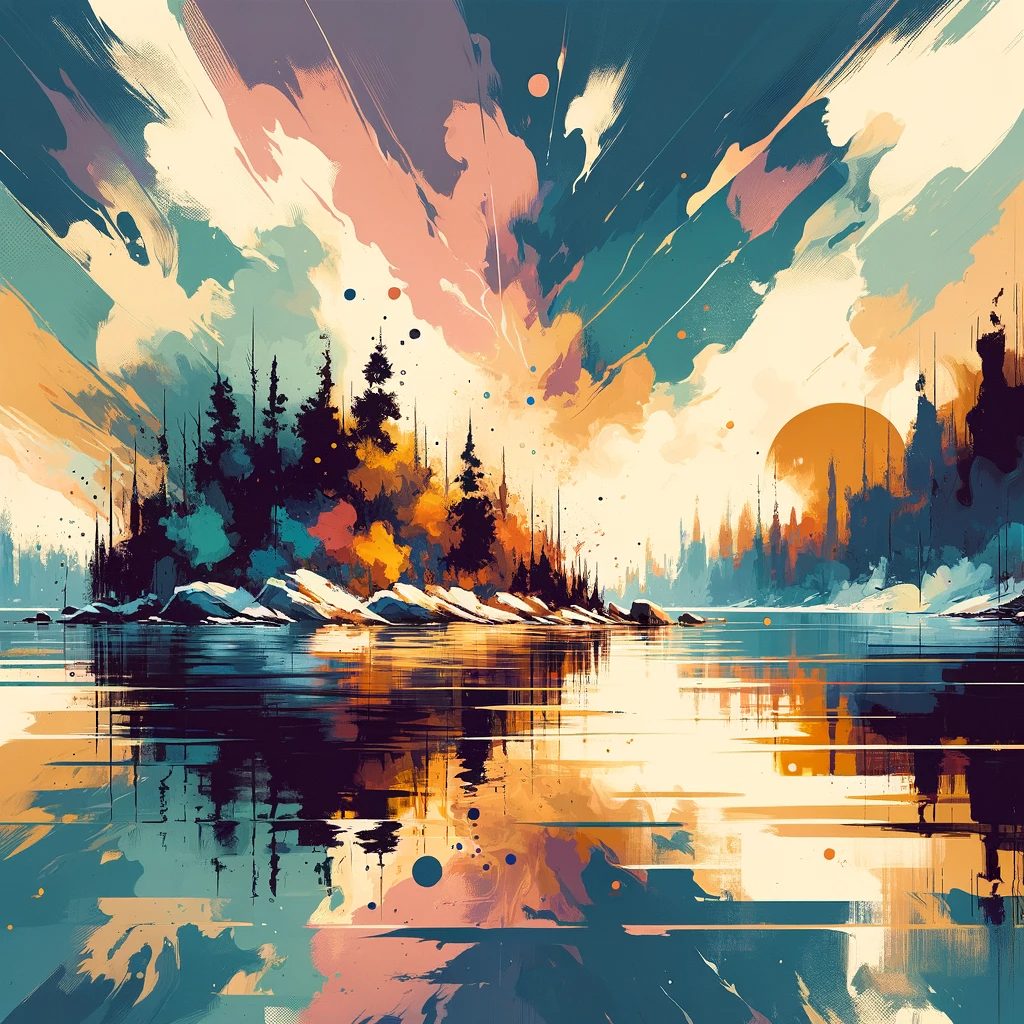
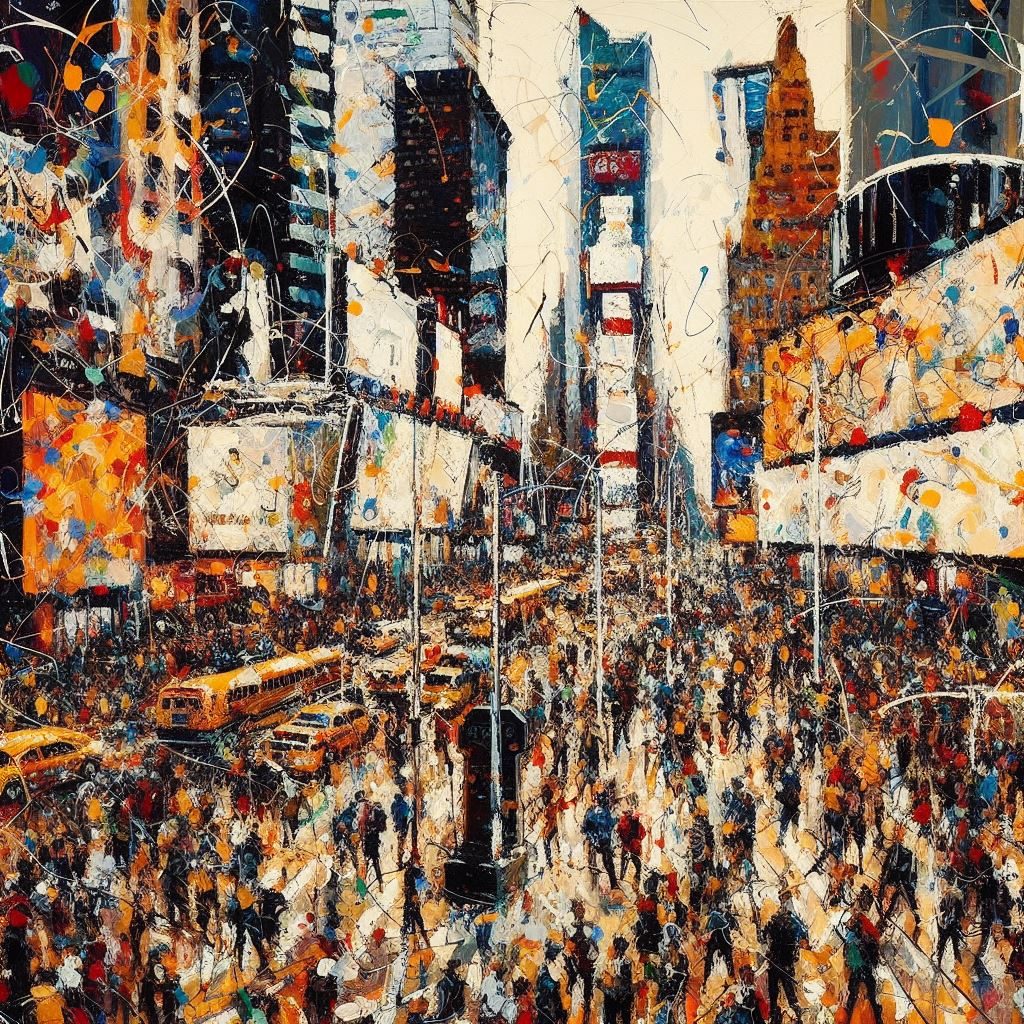
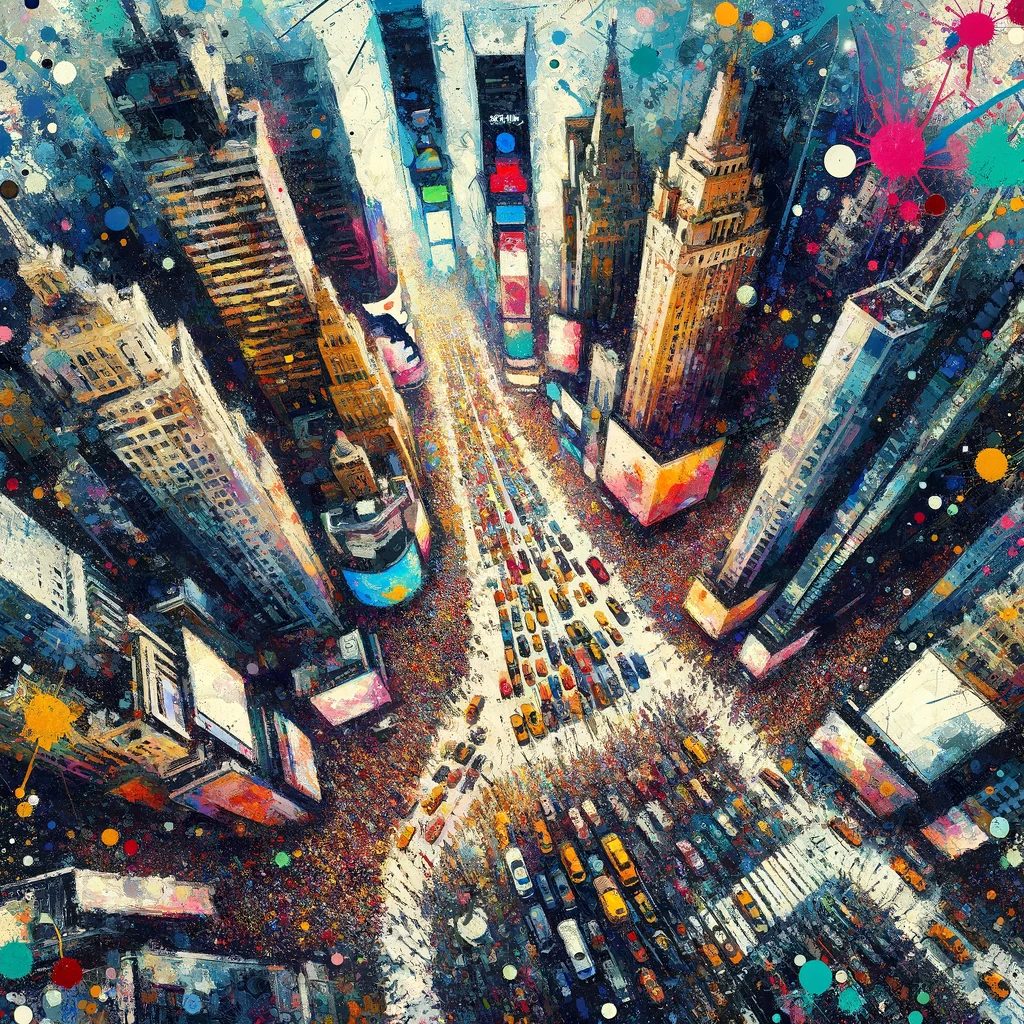
The thick descriptor
The following description was generated by GPT-4 and supplied to the image model as the thick prompt.
Abstract Expressionism often showcases spontaneous, subconscious creation, with an emphasis on unique and emotional intensity. Common features include large-scale artworks, a non-representational approach signifying rebellion against traditional styles, and an emphasis on individual expression. Painting techniques vary greatly – from Pollock’s drip method to Rothko’s color rectangles. Some works may appear chaotic and intense, while others are serene and minimalistic. To create similar art, focus on authentic emotional expression, intuitively choose your colors and don’t follow a specific object representation. Use bold brush strokes or even splatter/throw paint for effect.
About this movement
Background on Abstract Expressionism is available at its Wikipedia entry. The images above are not offered as an account of Abstract Expressionism as art historians understand it. They record what a commercial image model produced when asked for the style by name.
About this series
This entry is part of a survey, described in the series introduction. The full set of 60 movements is browsable in the Art Styles index. The survey used text-to-image generation, in which composition varies alongside the style itself.