AI Art Styles
This entry documents how a generative image model rendered Harlem Renaissance when the movement was named in a prompt. It forms part of a survey of 60 art movements generated in February 2024.
The images
Two subjects are held constant across the series: Lake Kenogamissi in Northern Ontario, and Times Square in New York City. Each is rendered twice. A thin prompt names the movement and nothing else. A thick prompt supplies a generated description of the movement’s visual characteristics.


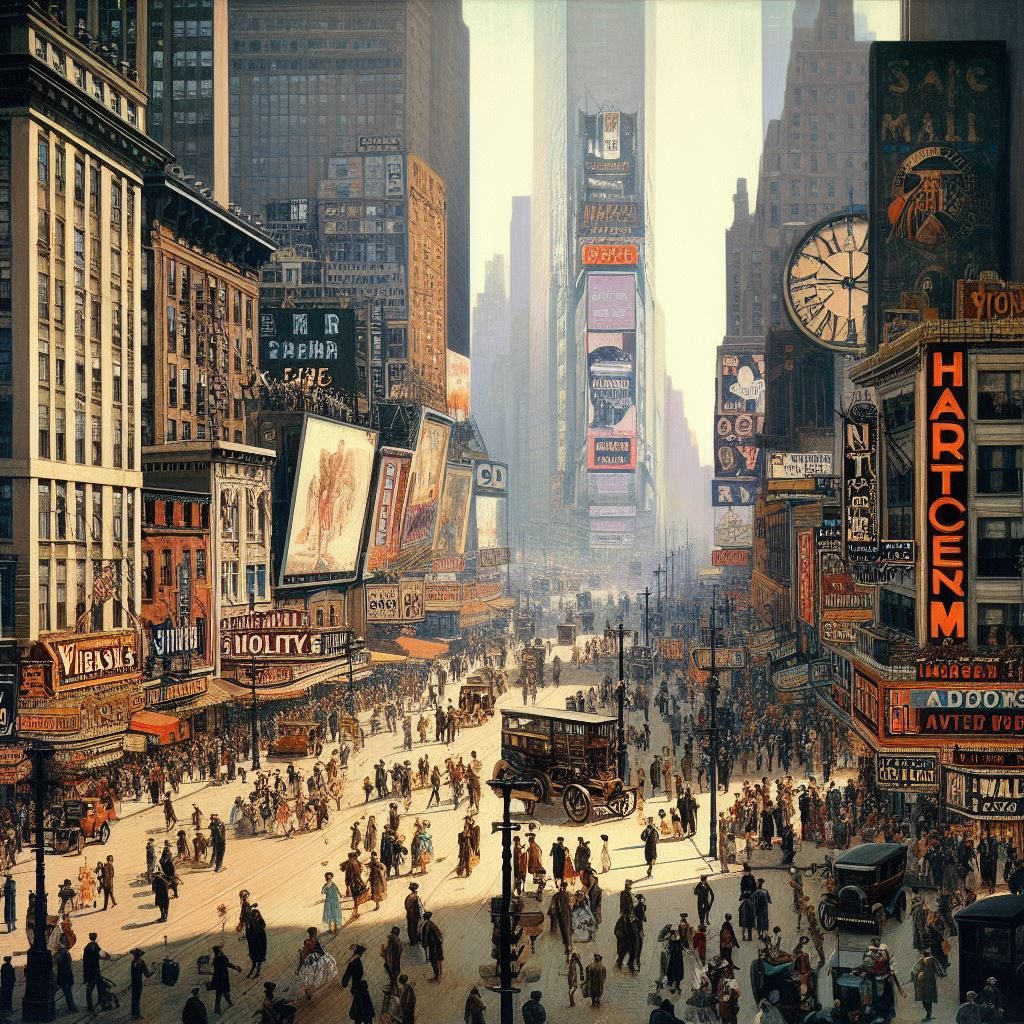
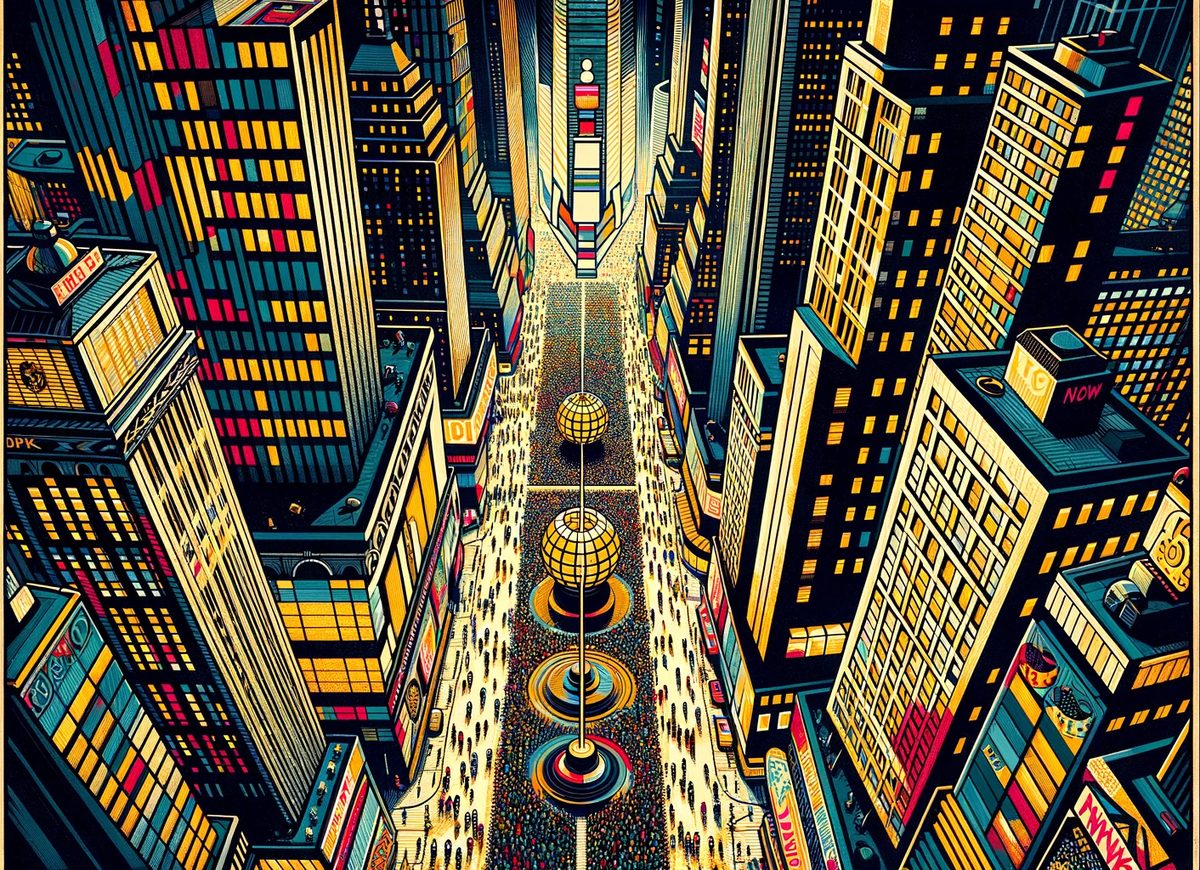
The thick descriptor
The image model’s original 2024 descriptor for this movement was incomplete. The summary below reconstructs a comparable description of the movement’s visual characteristics.
Harlem Renaissance art, flourishing in 1920s–30s New York, celebrates Black urban life and cultural identity with bold, rhythmic composition. Characteristic features include strong stylized figures, jazz-age nightlife scenes, African-derived motifs and pattern, and rich, saturated color. The style blends modernist form with social realism, dignifying everyday subjects—musicians, dancers, workers, city streets. To create art in this style, use confident outlines and flattened, decorative space, warm earthy and jewel tones, and a sense of movement and music; foreground human dignity and community.
About this movement
Background on Harlem Renaissance is available at its Wikipedia entry. The images above are not offered as an account of Harlem Renaissance as art historians understand it. They record what a commercial image model produced when asked for the style by name.
About this series
This entry is part of a survey, described in the series introduction. The full set of 60 movements is browsable in the Art Styles index. The survey used text-to-image generation, in which composition varies alongside the style itself.