AI Art Styles
This entry documents how a generative image model rendered Neo-Impressionism when the movement was named in a prompt. It forms part of a survey of 60 art movements generated in February 2024.
The images
Two subjects are held constant across the series: Lake Kenogamissi in Northern Ontario, and Times Square in New York City. Each is rendered twice. A thin prompt names the movement and nothing else. A thick prompt supplies a generated description of the movement’s visual characteristics.
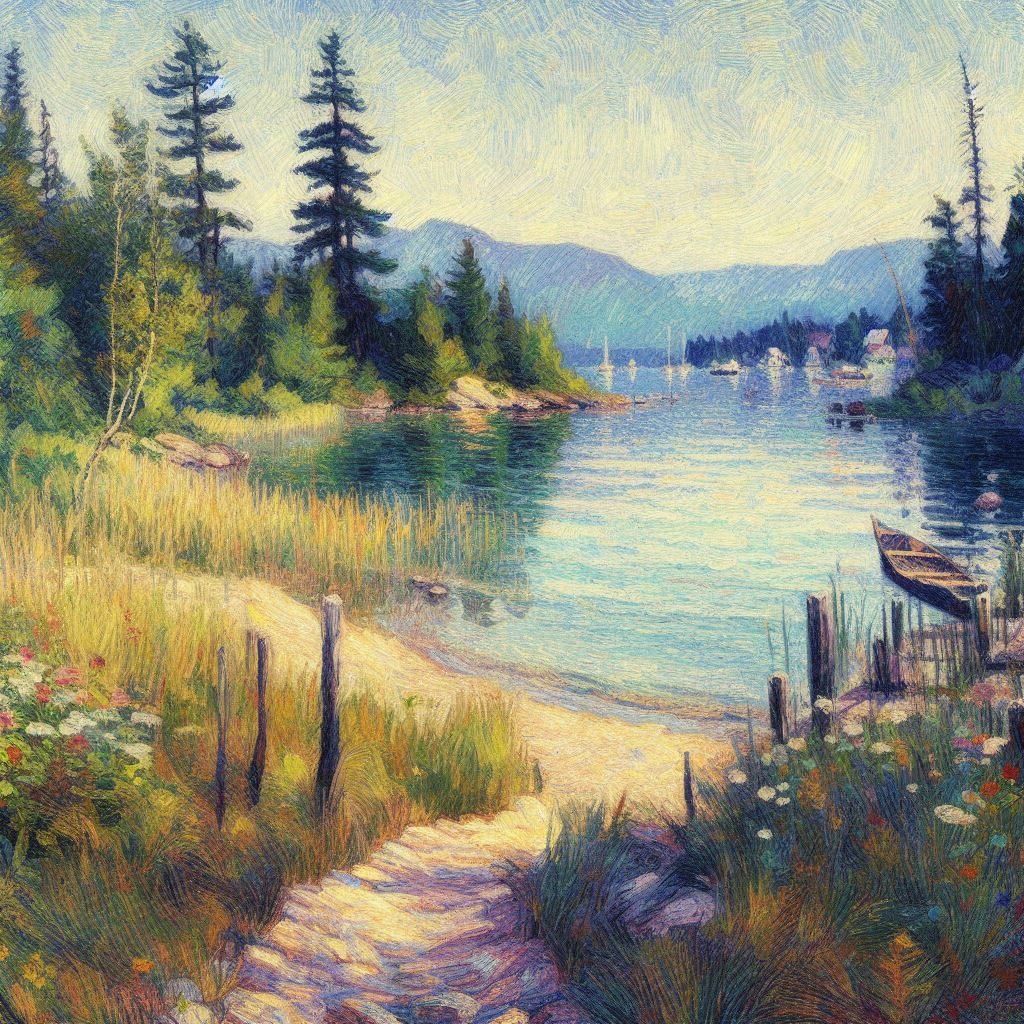
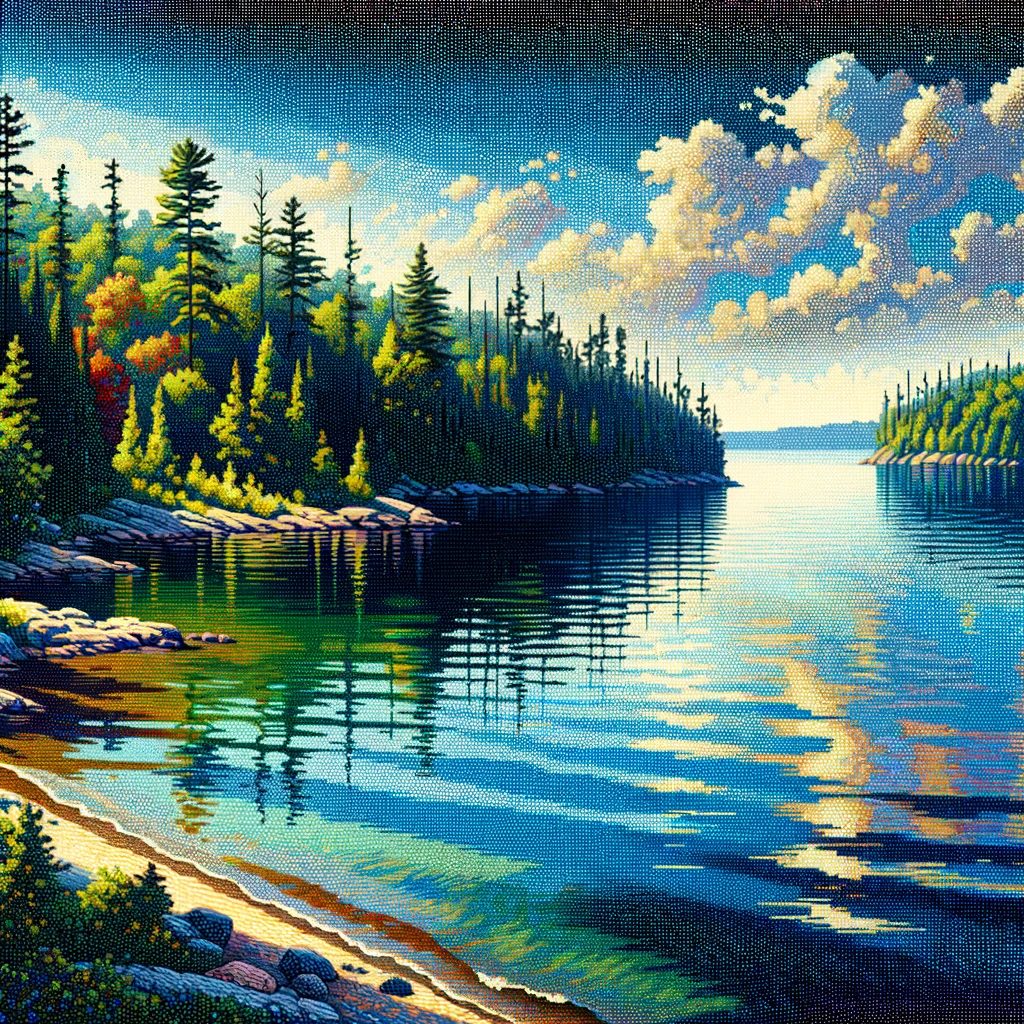
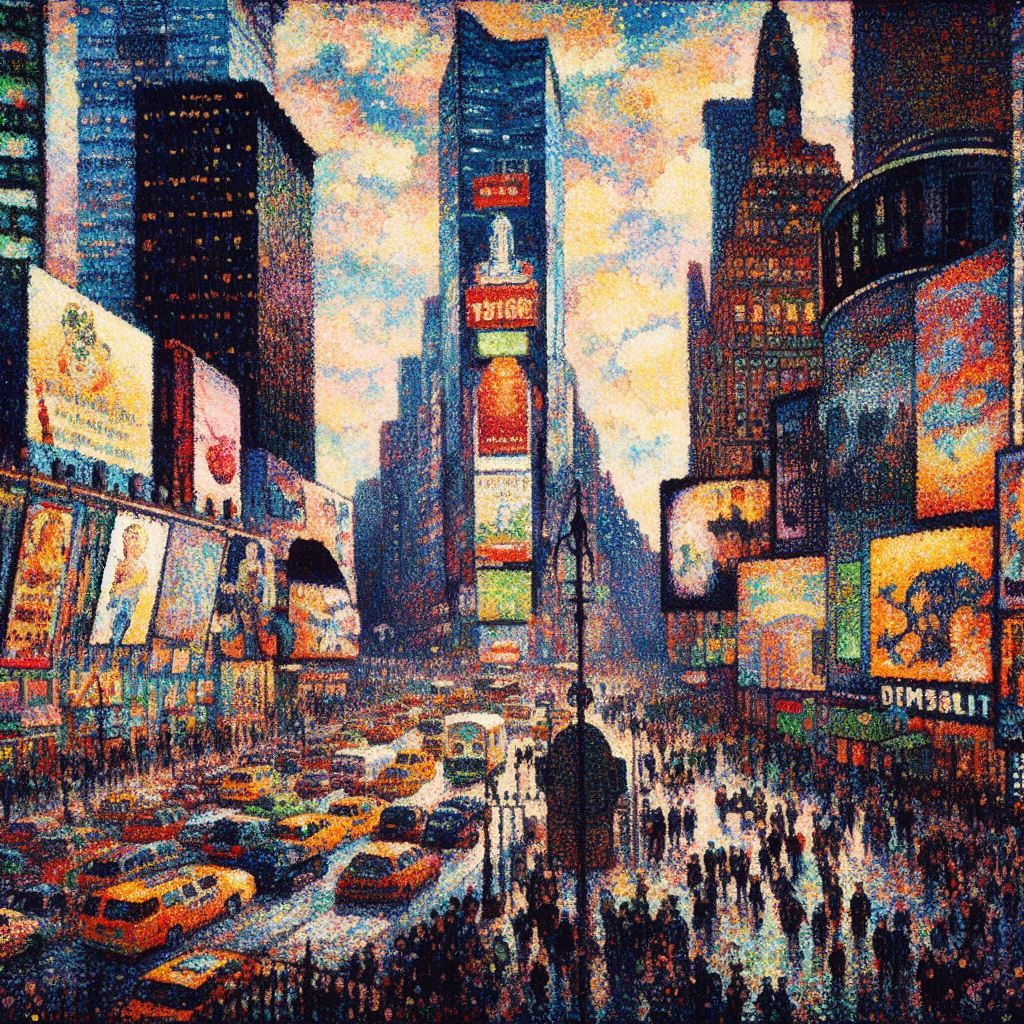
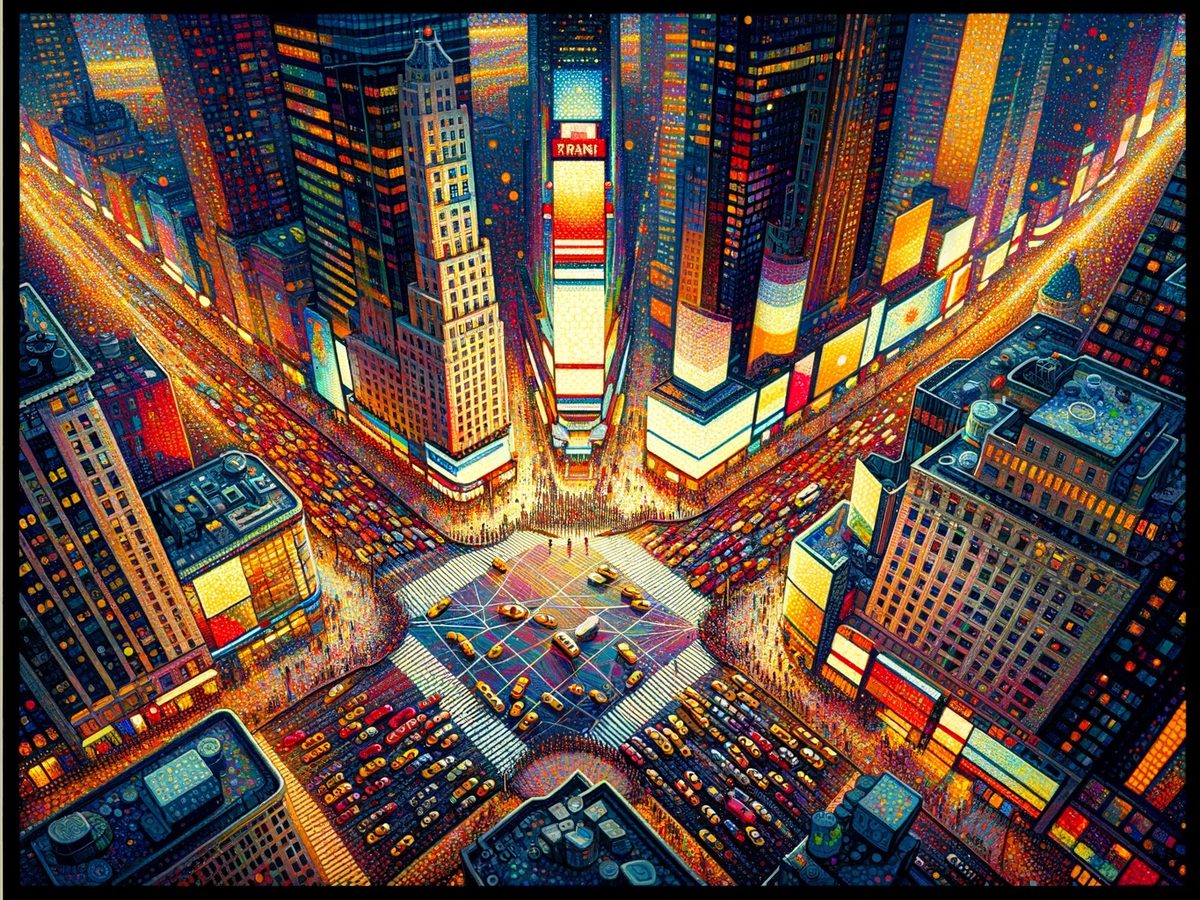
The thick descriptor
The following description was generated by GPT-4 and supplied to the image model as the thick prompt.
Neoimpressionism emphasizes scientific use of color and light, applying tiny dabs of primary colors close to each other to intensify the viewer’s perception via optical mixing. A technique known as Divisionism is often used, applying individual strokes of complementary and contrasting colors. Geometry is also embraced to reveal relationships between forms. To emulate this style, utilize pointillism or small, distinct strokes rather than large brush strokes and focus on pure, vibrant colors individually juxtaposed for luminous effect.
About this movement
Background on Neo-Impressionism is available at its Wikipedia entry. The images above are not offered as an account of Neo-Impressionism as art historians understand it. They record what a commercial image model produced when asked for the style by name.
About this series
This entry is part of a survey, described in the series introduction. The full set of 60 movements is browsable in the Art Styles index. The survey used text-to-image generation, in which composition varies alongside the style itself.